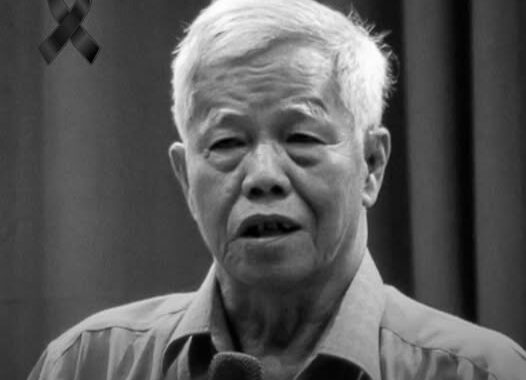
Rev. Heng Cheng, elder statesman of the Cambodian church and former General Secretary of the Evangelical Fellowship of Cambodia, went to be with his Lord on 27 January 2026.
Heng Cheng was born in Kampot Province in 1947. When Cheng’s mother died from malnutrition three months after he was born, his father sold him to a Vietnamese man, who cared for him for a year. A Cambodian government official adopted Cheng for two years but then handed him over to his uncle, who raised him as his son.
As a young man, Cheng enlisted in the Special Forces of Lon Nol’s Republic, fighting against the Viet Cong and Khmer Rouge and rising to the rank of Captain. In the 1970s he left the army and enrolled as a student at the Faculty of Medicine in Phnom Penh.
After the Khmer Rouge came to power in April 1975, Cheng found his way to Prey Veng Province, where he stayed until 16 October 1976. On that day, knowing that the Khmer Rouge wanted to kill him because he was educated and knew medicine, Cheng fled to Vietnam just before they came to arrest him.
In January 1978, while living in Hanoi, Cheng started attending church with his aunt. After sampling the Roman Catholic Church and the Jehovah’s Witnesses, on 16 December 1978, Cheng gave his life to Christ, began to attend church consistently and became involved in a Christian and Missionary Alliance (C&MA) church. In 1979, C&MA created an underground Bible school, and Cheng enrolled.
In 1981, Cheng became a youth leader in a C&MA ‘open church’ in Saigon, where he became a youth pastor in 1983. In 1984, he married a Vietnamese woman, and at the end of that year he and his wife returned to Phnom Penh. Shortly after his return, he started a church, which would later be called the Jerusalem Church, a Vietnamese-Cambodian church. The church grew, but since Cheng was accused of being a spy for the Vietnamese, and the Cambodian Christians feared that association with him would get them in trouble with the government, no other churches paid much attention to Jerusalem or bothered to include them in joint fellowship opportunities. But in 1993, Cheng gave a testimony at Global Network when Cambodia Christian Services were preparing for the “March for Jesus”, planned for early 1994. During that planning meeting, Cheng stood and made a fiery speech about the lack of unity in the Christian community and how Christian brothers and sisters had ostracised him and his church because of unfounded suspicions and prejudice.
After quoting Revelation 5:9-10, Cheng said, “You won’t receive me and my church, but the blood of Christ purchased me and my people and added us into a group from every tribe and tongue. If you won’t accept us, we aren’t going to lose sleep over it. Jesus has already accepted us, and we are already a part of a much bigger community than yours. Have it your way if you think you must.”
After Cheng’s powerful and moving testimony, those who attended noticed tears in the eyes of Pastor Mam Barnabas and knew Cheng’s speech had touched his heart. During the remainder of that meeting, it was decided that the Jerusalem church was to be responsible for the worship in the first “March for Jesus” in Cambodia.
In late 1996, the newborn Evangelical Fellowship of Cambodia (EFC) invited Cheng to become its first General Secretary, and in 1997, he resigned as assistant pastor of Jerusalem Church to fill this post.
After a long and effective tenure, Cheng retired and became involved in various Christian organisations and projects. He served as Chairman of the EFC until his death. His last public engagement was to speak at a luncheon for church leaders ahead of the Love Siem Reap Festival.
“This is a great day,” Cheng said. “You can see the growth of Christians in Cambodia and especially the freedom of religion.”
God used Heng Cheng as one of the catalysts of that growth. He served bravely in the army of the Khmer Republic, but more significantly, he became a soldier of Christ, a good and faithful servant who has now received his master’s “well done; enter into the joy of your Lord.”
Mostly adapted from Cry of the Gecko by Brian Maher and Uon Seila.